English
 Chinese
Modular vs. Containerized Data Centers: What Fits Your Project?
 2026-09-29
 ACwatt
1. Why the two terms are often confused
In the modular vs containerized data center debate, the two terms are frequently used interchangeably. They are not the same thing. This confusion leads to wrong selections: a project that needs a micro data center may be over-specified with a container, while a project that needs rapid mobile deployment may be under-served by a prefabricated room.
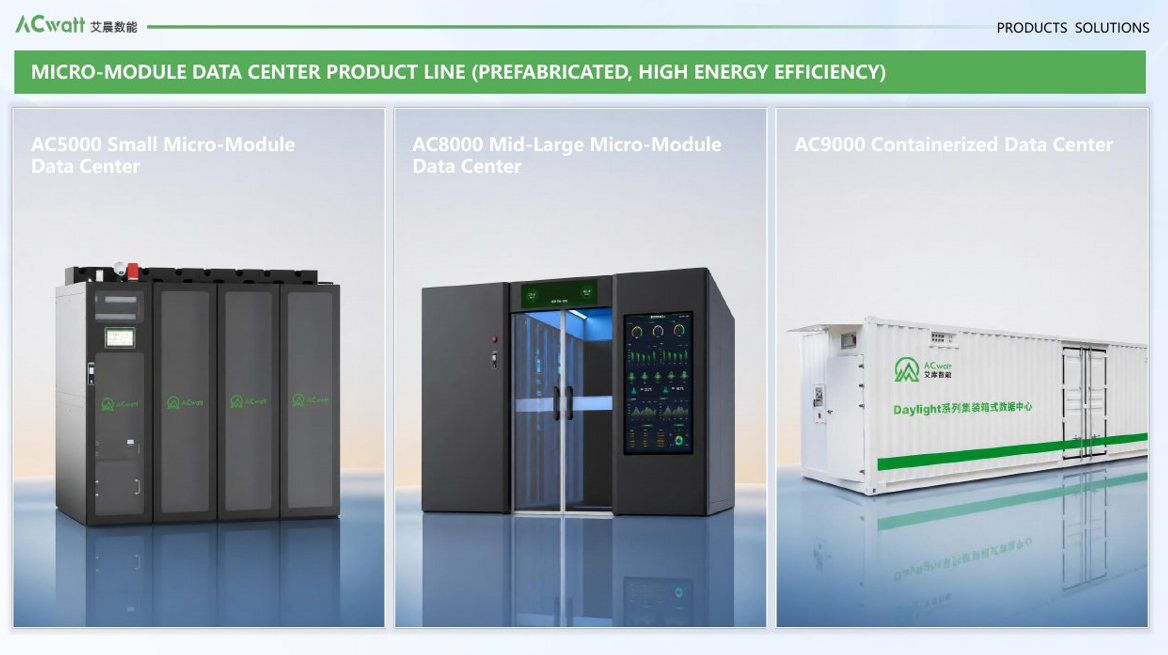
- A modular data center is an integrated infrastructure unit — power, cooling, racks, and monitoring — assembled in a factory and deployed on-site. It can be a single rack (micro data center) or a larger prefabricated room.
- A containerized data center, also called a container data center, is a specific type of modular data center built inside a standard shipping container (ISO 20ft or 40ft), designed for transport and rapid deployment.
Understanding the difference between modular and containerized data centers is critical before selecting a deployment model. For a deeper comparison of supporting infrastructure, see our precision cooling guide.
2. Standards and comparison framework
Relevant standards
These standards define structural, infrastructure, and safety requirements. They do not prescribe modular vs. containerized. Instead, that decision must be based on deployment scenario, expansion plan, and site conditions. Key references include ISO 1496-1 for container specification, TIA-942 for data center infrastructure, IEC 61439 for low-voltage switchgear assemblies, NFPA 75 for fire protection, and Uptime Institute Tier Certification for data center reliability standards.
| Standard | Scope |
|---|---|
| ISO 1496-1 | Series 1 freight containers — specification and testing |
| TIA-942 | Telecommunications infrastructure standard for data centers |
| IEC 61439 | Low-voltage switchgear and controlgear assemblies |
| NFPA 75 | Fire protection of IT equipment |
| Uptime Institute | Tier certification for data center reliability |
Comparison framework: modular vs containerized data centers
| Dimension | Modular data center | Containerized data center |
|---|---|---|
| Deployment speed | Fast (weeks) | Very fast (days) |
| Scalability | High (add modules) | Limited (add containers) |
| Transportability | Low (site-built) | High (ISO container) |
| Power density | Medium–high | Medium |
| Typical size | 1–20+ racks | 10–50+ racks per container |
| Best fit | Enterprise, edge, branch | Remote, temporary, disaster recovery |
In short, when comparing modular vs containerized data centers, modular data centers are the better choice for permanent enterprise or edge deployments that need to scale over time. Containerized data centers are the better choice for rapid deployment, remote sites, or temporary capacity.
3. A real-world example: museum IT infrastructure upgrade
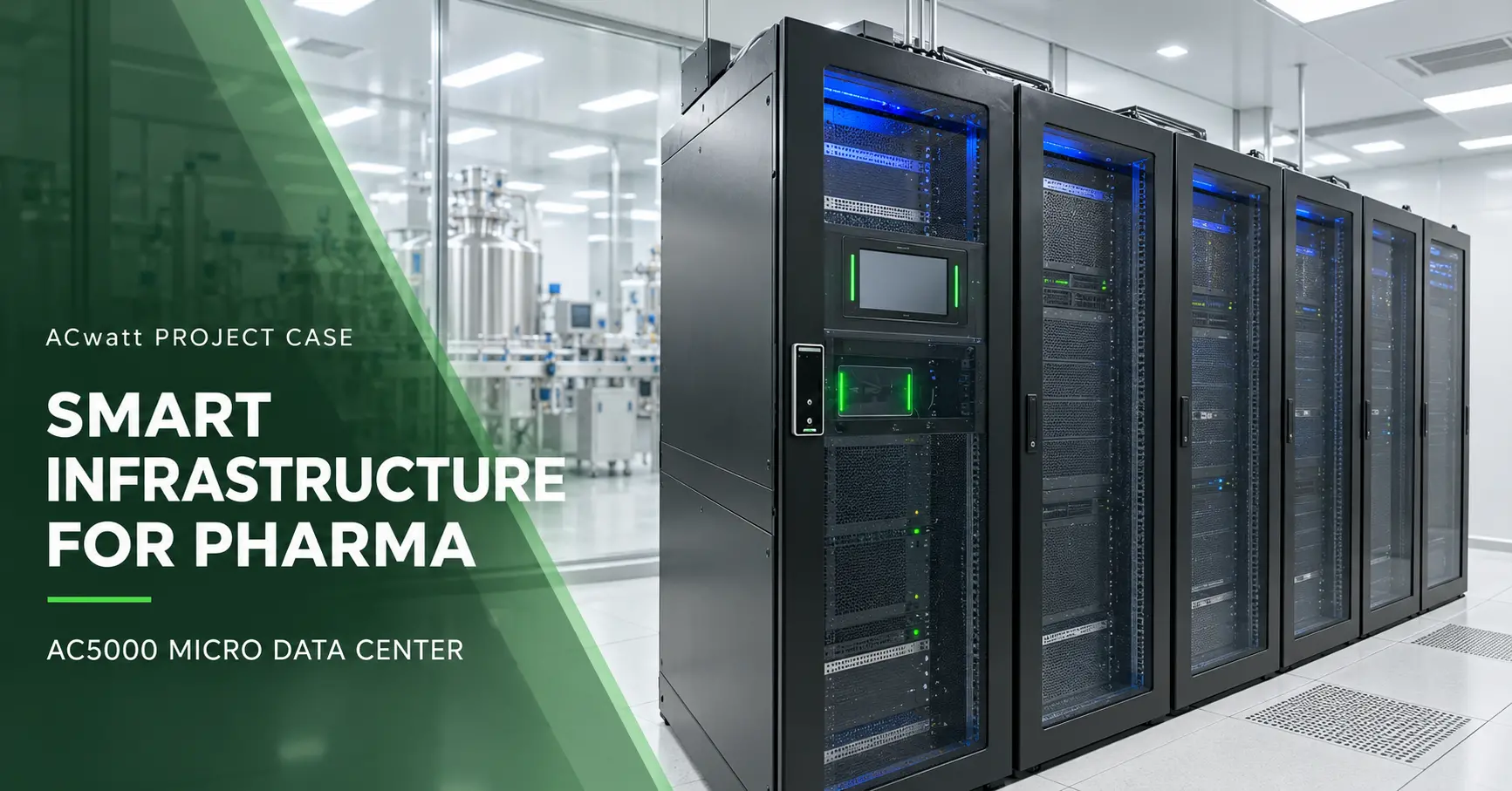
To make this concrete, consider a recent ACwatt project. A world rice origin museum in Shangshan needed to upgrade its IT infrastructure. The museum had limited indoor space and could not accommodate a traditional server room build-out.
The project team evaluated two options: a containerized data center placed outdoors, or a micro modular data center installed indoors. They chose the micro modular approach because the museum needed a permanent, integrated solution with power, cooling, racks, and monitoring in a compact footprint. The chosen product was the AC5000 micro data center.
The result: the museum gained a fully integrated IT infrastructure without new construction, and the system was deployed in weeks instead of months. This is a real example of how data center deployment decisions and modular data center selection can be driven by site constraints and speed, not just cost.
4. Decision matrix and deployment guidance
| Project condition | Recommended solution | ACwatt product |
|---|---|---|
| Edge / branch IT, 1–10 racks | Micro modular data center | AC5000 |
| Enterprise data center, 10–50 racks | Prefabricated modular data center | AC8000 |
| Remote site, rapid deployment | Containerized data center | AC9000 (project-based) |
| Temporary capacity / disaster recovery | Containerized data center | AC9000 (project-based) |
| Permanent facility, phased expansion | Modular data center | AC8000 |
Deployment checklist
- Confirm whether the site is permanent, temporary, or mobile.
- Estimate initial rack count and 3–5 year expansion plan.
- Verify transport access — road width, crane access, container handling.
- Confirm local building codes and permitting requirements.
- Verify power and network connectivity at the site.
- Confirm cooling and fire suppression meet local standards.
5. Expert commentary
"The most common mistake we see in the modular vs containerized data center discussion is treating them as the same thing. They are not. A container is a delivery format. Modularity is a design principle. You can have a modular data center that is not in a container, and you can have a container that is not truly modular. The right question is not 'which one is better?' but 'which one fits the site, the timeline, and the expansion plan?' For most permanent enterprise and edge projects, modular wins. For rapid deployment or temporary capacity, containerized wins."
— ACwatt Technical Team
6. Video walkthrough (coming soon)
We are preparing a short video walkthrough that compares a modular data center and a containerized data center side by side. The video will cover:
- Physical footprint and layout comparison
- Deployment timeline comparison
- Cooling and power architecture differences
- Expansion and maintenance access
Check back soon, or contact our pre-sales team to request an early preview.
7. Frequently asked questions
Is a containerized data center always faster to deploy than a modular one?
Not always. A containerized data center can be deployed in days once it arrives on site, but the container itself still needs to be manufactured and configured. Modular data centers are factory-assembled too, and standard modules can often ship within 6–10 weeks. The real difference is transportability and site preparation, not raw manufacturing speed.
Can a modular data center be expanded later?
Yes. This is one of the main advantages of modular over containerized. Modular data centers can add power modules, cooling units, or additional racks as demand grows. Containerized data centers can also add containers, but the expansion is more constrained by container size and transport logistics.
Which one is better for edge computing?
For most edge deployments, a micro modular data center is the better fit. It provides integrated power, cooling, and monitoring in a compact footprint, and it can be deployed indoors in a branch office or warehouse. Containerized data centers are usually too large for typical edge sites.
What is the typical lead time for a modular data center?
Standard modular data centers are typically factory-assembled and tested. Lead time depends on capacity and configuration, but standard units can usually be delivered within 8–12 weeks. Site installation is faster than traditional construction because the infrastructure arrives pre-integrated.
Do containerized data centers require special permits?
Yes, in most cases. Containerized data centers are classified as structures in many jurisdictions, so they may require building permits, electrical permits, and fire suppression approvals. Local codes vary widely, so it is important to confirm requirements before ordering.
What is the difference between a micro data center and a modular data center?
A micro data center is a small-scale modular data center, typically containing 1–10 racks. A modular data center can range from a single rack to a large prefabricated room with dozens of racks. In short, micro is a subset of modular.
What is the difference between a prefabricated data center and a containerized data center?
A prefabricated data center is assembled in a factory and shipped to the site as modules or skids. It can be installed inside an existing building. A containerized data center is built inside an ISO shipping container and can be placed outdoors. In short, all containerized data centers are prefabricated, but not all prefabricated data centers are containerized.
Which one has lower total cost of ownership, modular or containerized?
It depends on the project. Modular data centers usually have lower TCO for permanent deployments because they can scale incrementally and integrate with existing building infrastructure. Containerized data centers often have higher TCO per rack but lower site preparation cost, which favors remote or temporary deployments.
Need help choosing a data center solution?
Share your deployment scenario and expansion plan with ACwatt.