English
 Chinese
 2026-09-14
 ACwatt Power
ACwatt Power · ACM Series · UPS Selection Guide
10–30 kVA Modular UPS: Compact Design, Scalable Power | ACwatt ACM Series
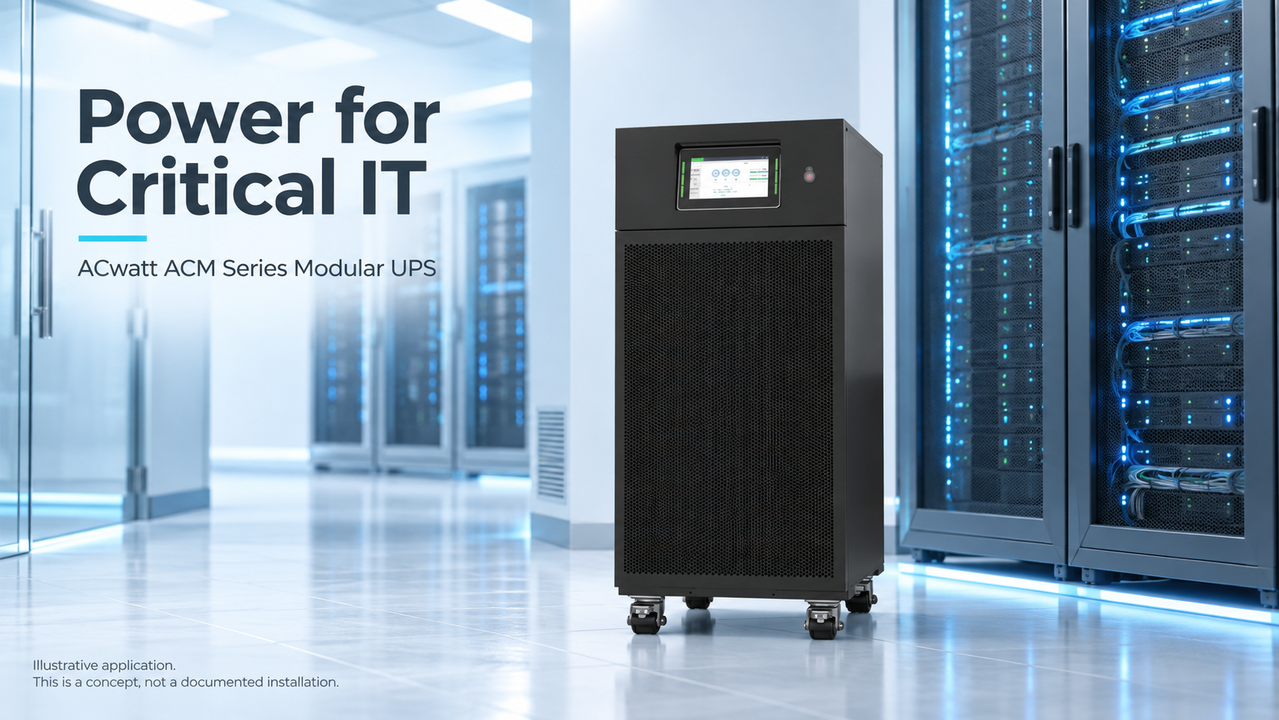
Space is limited. Your power requirements can grow. A 10–30 kVA modular UPS project brings these two challenges together: protecting today's critical equipment while planning a practical route for tomorrow's expansion.
Explore the ACwatt ACM Series and the key decisions behind a compact modular UPS installation—from capacity and cabinet space to battery autonomy and future growth.
Understanding a 10–30 kVA modular UPS project
An uninterruptible power supply provides a bridge through a mains power interruption, helping connected equipment continue operating for the available battery runtime. A modular UPS uses a system architecture built around power modules, with the available configurations determined by its cabinet and module design.
For buyers evaluating a 10–30 kVA modular UPS, the starting point is the electrical load. Capacity, runtime and redundancy are separate requirements: selecting a UPS rating alone does not determine how long the equipment will run or whether the installation can tolerate a module becoming unavailable.
Compare the options in our UPS product range and review the ACM Series product information when preparing your technical enquiry.
Discover the ACwatt ACM Series
Compact design: plan the complete installation
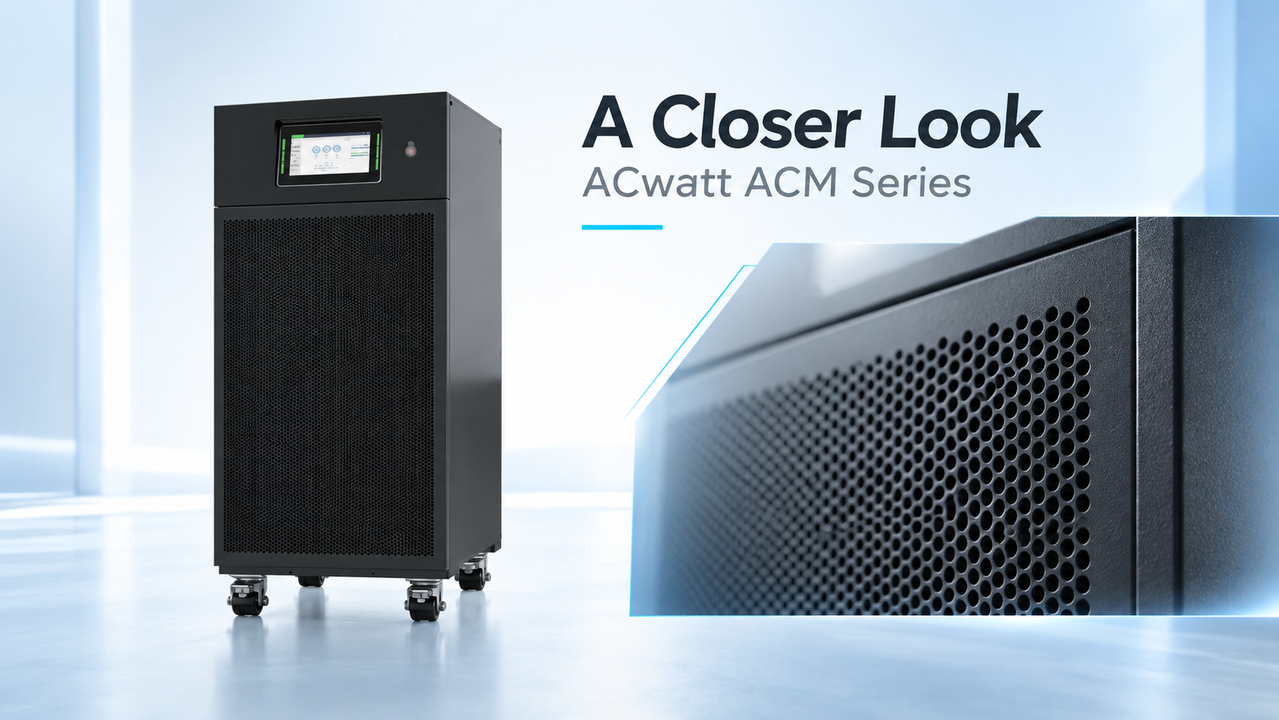
A compact cabinet can help organize power infrastructure where floor space is valuable. However, the complete installation needs more room than the cabinet footprint alone. Battery storage, cable routing, ventilation and maintenance access all belong in the layout.
Cabinet placement
Check the selected cabinet dimensions, access route and floor-loading requirements before choosing its location.
Service access
Allow the manufacturer's required clearances for inspections, servicing, ventilation and safe equipment access.
Battery space
Include the selected battery arrangement in the room plan. Longer autonomy can change the total space requirement.
For coordinated infrastructure planning, explore ACwatt's modular data center solutions and precision cooling systems.
Scalable power starts with a configuration plan
Modularity can provide a path for adding power capacity within a compatible system. Expansion still depends on the selected cabinet, supported modules, electrical distribution, battery system and installation design. Spare physical space alone does not guarantee that capacity can be increased.
Define both your initial and future load before ordering. Ask ACwatt to identify the suitable starting configuration, available expansion steps and any supporting equipment that must be sized for future growth.
Capacity and redundancy serve different purposes
Additional module capacity may support a larger load or provide redundancy. In an N+1 design, N represents the modules needed to support the design load, with one additional module providing reserve capacity. The remaining modules must still support that load when one is unavailable. Confirm whether the proposed ACM configuration supports the redundancy arrangement your project needs.
10–30 kVA modular UPS selection table
Use this planning table to prepare an enquiry. It is a selection checklist, not a model specification sheet.
| Selection factor | Information to provide | Why it matters |
|---|---|---|
| Load capacity | Present and planned demand in both kW and kVA | Both UPS output limits must be respected; kVA alone is insufficient. |
| Electrical supply | Input/output voltage, frequency and phase requirements | The selected model must match the site's electrical system. |
| Module configuration | Initial capacity, future target and redundancy objective | Determines the module arrangement and expansion requirements. |
| Battery autonomy | Required backup minutes at a stated load | Battery selection determines runtime alongside operating conditions. |
| Installation space | Available area, access clearances and battery location | Checks the complete installation rather than cabinet size alone. |
| Environment | Temperature, altitude, dust exposure and cooling provision | Allows the supplier to assess suitability and any operating limitations. |
| Monitoring and service | Required interfaces, alarms, bypass and maintenance arrangements | Aligns the system with site operations and service procedures. |
Do not confuse kVA with battery runtime
kVA expresses apparent power capacity; it does not specify stored battery energy. A higher-rated UPS does not automatically provide longer backup time. Ask for a runtime calculation using your actual load, the proposed batteries and the applicable operating conditions.
Where to evaluate a compact modular UPS
A 10–30 kVA requirement can arise in several settings. Suitability depends on the actual equipment load and site conditions, so use the applications below as planning examples.
- Server rooms and edge IT: assess backup power for servers, storage and networking equipment, with provision for planned expansion.
- Commercial IT infrastructure: evaluate protection for the communications and business systems that need continuity during an outage.
- Industrial control and monitoring: review the electrical characteristics and environment before specifying backup power for compatible critical loads.
Plan your next power project
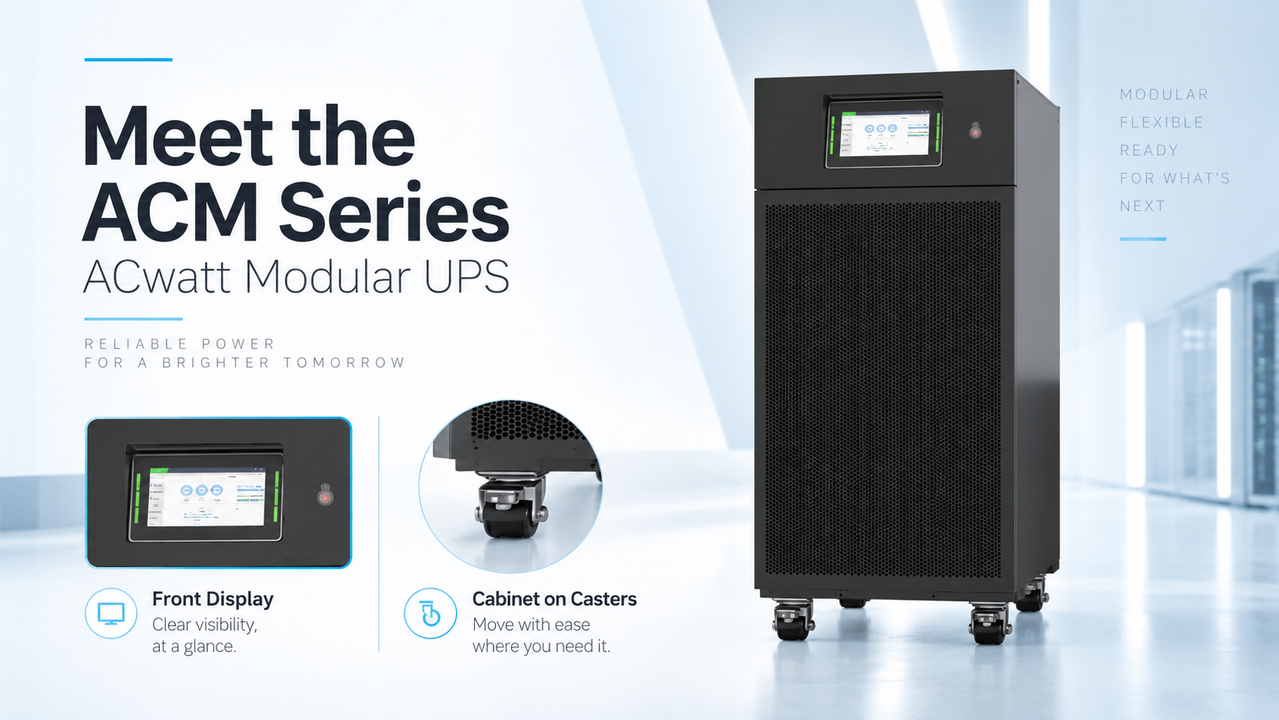
Find the right ACM configuration
Send ACwatt your load, supply voltage, required runtime, available space and expansion goals. Request a configuration proposal with the relevant datasheet, battery arrangement and installation requirements.
For distributors and brands, explore our OEM/ODM UPS manufacturing services.
Frequently asked questions
What is a 10–30 kVA modular UPS?
It describes a modular uninterruptible power supply requirement in the 10–30 kVA range. The actual installed rating depends on the selected system and module configuration. Confirm available ACM configurations with ACwatt.
Is the ACM Series limited to 30 kVA?
No. The linked product is identified as part of the ACM 10–180 kVA family. This article focuses on smaller project requirements; it does not mean every cabinet or module can cover the entire family range.
Can I increase capacity later?
A compatible modular design may support expansion. Confirm the cabinet limit, module options, electrical distribution and battery requirements before ordering. Expansion must follow the manufacturer's installation and service procedures.
How long will the UPS power my equipment?
Runtime depends on the connected load, battery configuration, battery condition and operating environment. Request a calculated runtime for your specific load instead of estimating it from the UPS kVA rating.
Does a modular UPS automatically provide N+1 redundancy?
No. Redundancy requires an appropriate module arrangement and sufficient remaining capacity to support the design load when one module is unavailable. Confirm the proposed configuration and its limits.
What information do I need for a quotation?
Provide load demand in kW and kVA, voltage and phase requirements, desired runtime, installation conditions, future growth and redundancy needs. Include any required monitoring interfaces or project specifications.
Does ACwatt offer OEM/ODM cooperation?
Yes. ACwatt describes OEM/ODM customization and SKD cooperation on its manufacturing capabilities page. Contact the team to discuss your branding and technical requirements.