English
 Chinese
Uninterruptible Power Supply (UPS): Applications, Types and How to Choose
 2026-09-21
 ACwatt
Uninterruptible Power Supply (UPS): Applications, Types and How to Choose
From data centers and server rooms to telecommunications and industrial automation, UPS systems help protect critical equipment when power becomes unstable or unavailable. Learn where UPS systems are used, how they work and what to consider when selecting one.
What Is an Uninterruptible Power Supply (UPS)?
An uninterruptible power supply, commonly known as a UPS, is a power protection system. It supplies backup power when the normal electrical source is interrupted.
A UPS is used to keep connected equipment operating during a power interruption. Depending on its design, it can also help protect equipment from voltage fluctuations and other power disturbances.
This is particularly important for equipment that cannot simply shut down. Servers, networking equipment and industrial control systems must keep running without interruption.
How Does a UPS Work?
The exact power path depends on the UPS topology. In an online double-conversion UPS, the basic power path can be simplified as:
The rectifier converts incoming AC power into DC power. The inverter then converts DC power back into AC power for the connected equipment. When utility power fails, the battery supports the DC side. This allows the inverter to continue supplying the load.
Online double-conversion UPS systems are commonly used for critical applications. The load is continuously supplied through the inverter during normal operation.
What Are the Main Types of UPS?
UPS systems are available in different topologies. The appropriate type depends on the equipment being protected, the required level of power protection and the operating environment.
| UPS Type | Typical Applications | Main Characteristic |
|---|---|---|
| Offline / Standby | Basic office equipment, PCs and less critical loads | Simple backup power architecture |
| Line-Interactive | Small offices, networking and selected IT loads | Voltage regulation with battery backup |
| Online Double Conversion | Data centers, telecom, industrial and other critical infrastructure | Continuous power conversion and conditioning |
6 Common Uninterruptible Power Supply Applications
UPS systems are used in many environments where a power interruption could affect equipment, data, communication or business operations. Here are six common applications.
Data Centers and Cloud Infrastructure
Data centers depend on continuous power for servers, storage, networking, cooling and supporting infrastructure. Even a short interruption can affect IT services and critical workloads.
Online and modular UPS systems are commonly used in data centers. They provide continuous power protection and support scalability and redundancy requirements.
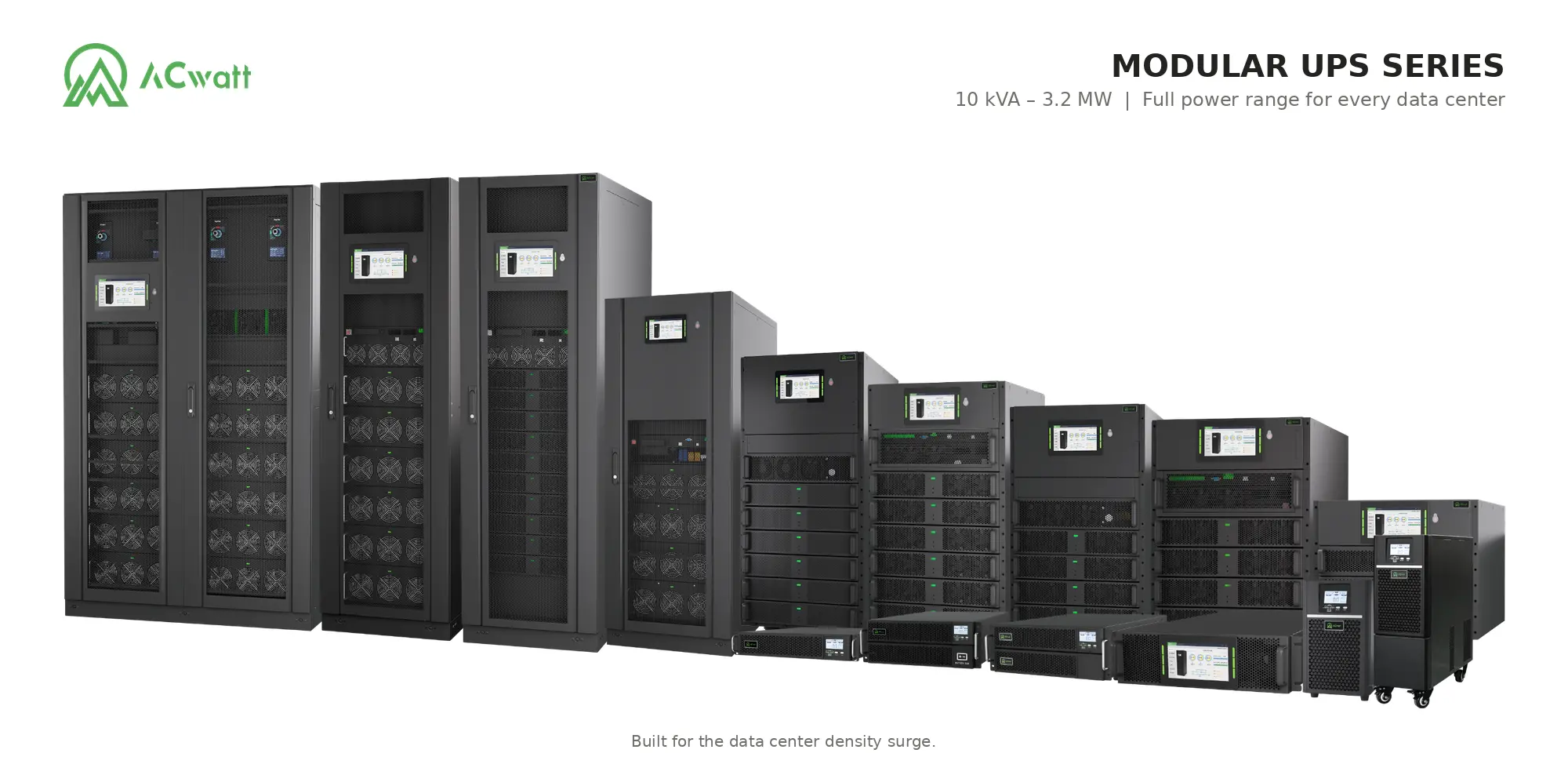
ACwatt ACM Series Modular UPS
ACwatt's ACM modular UPS portfolio covers different capacity ranges for applications including data centers, telecommunications, industrial facilities, healthcare and finance.
Explore ACM Modular UPSServer Rooms and IT Infrastructure
Small and medium-sized server rooms also depend on reliable power. Servers, switches, storage systems and communication equipment can all require protection from unexpected power interruptions.
Rack-mounted online UPS systems are designed to fit standard cabinets. They can be used for IT loads where continuous power protection is required.
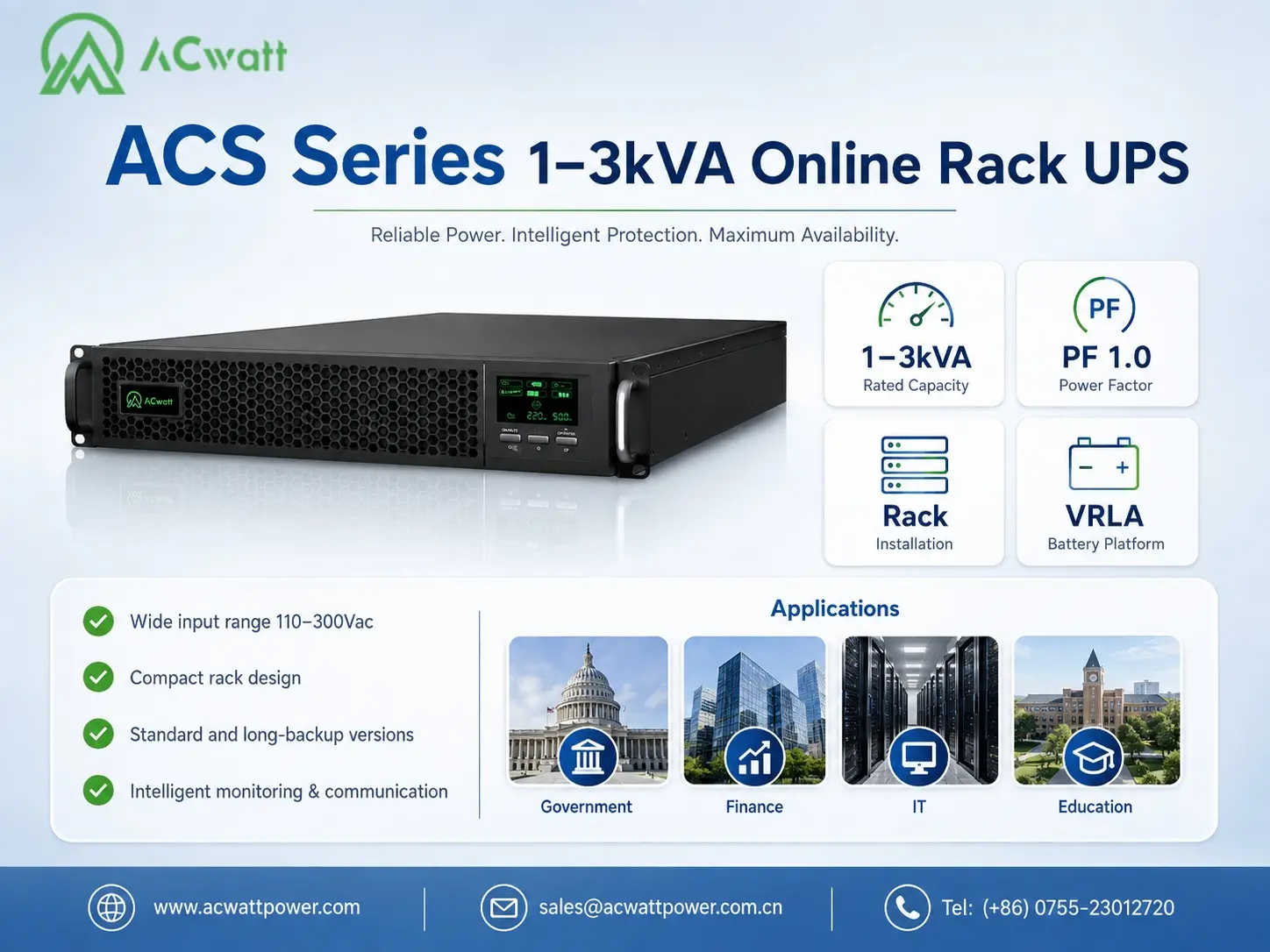
ACwatt ACS Series 1–3kVA Online Rack UPS
The ACS Series is designed for servers, network equipment, communication systems and other rack-based critical loads. The series features an output power factor of 1.0.
View Rack UPSTelecommunications and Network Infrastructure
Telecommunications infrastructure needs reliable power to maintain communication and network services. UPS systems can support network equipment, communication rooms, hubs and other critical loads.
Telecom UPS projects should consider the load profile, required backup time, battery configuration, monitoring requirements and installation environment.
ACwatt's modular UPS systems list telecommunications among their target applications.
Healthcare and Medical Facilities
Healthcare facilities rely on electrical power for medical equipment, IT infrastructure, communications, monitoring and other critical loads.
UPS systems can provide a power bridge during interruptions. They help maintain a stable supply for compatible equipment. The required configuration depends on the equipment, facility electrical design and applicable project requirements.
For healthcare projects, engineers should evaluate continuous load, starting characteristics, redundancy and required battery runtime before selecting a UPS.
Industrial Automation and Manufacturing
Modern manufacturing facilities use PLCs, industrial computers, sensors, control systems and automation equipment. A power interruption can affect production processes even when the outage is brief.
Industrial UPS applications therefore focus on maintaining power to selected control, monitoring and other critical loads.
The correct UPS depends on the electrical characteristics of the equipment, operating environment, load behavior and required autonomy.
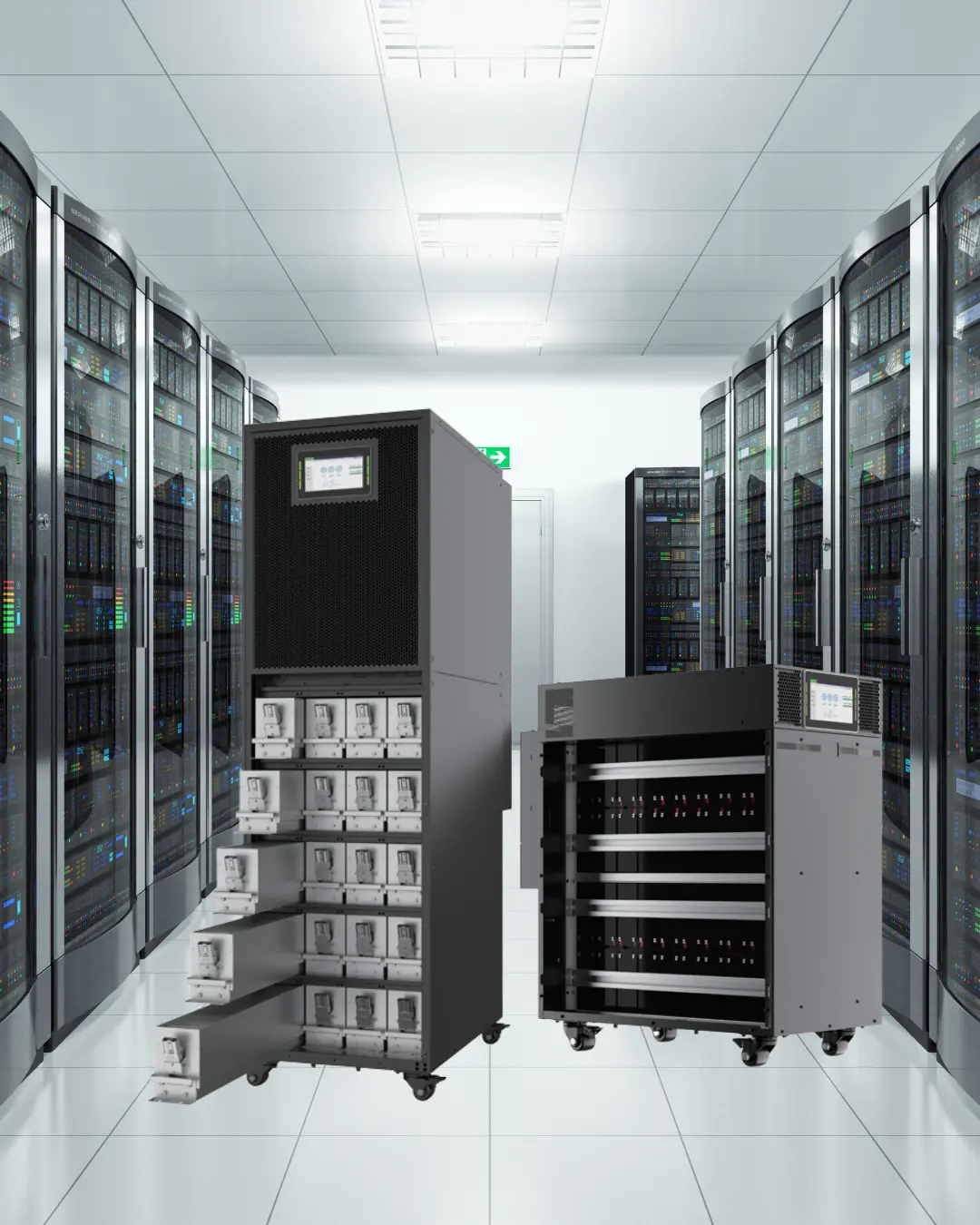
ACwatt ACT Series Three-Phase UPS
ACwatt's ACT Series provides three-phase UPS configurations for applications including data centers, telecommunications, industrial environments, healthcare and finance.
View ACT SeriesFinance and Other Critical Infrastructure
Financial institutions depend heavily on servers, data centers, networking and communication infrastructure. Reliable power is therefore an important part of maintaining digital services.
UPS systems can protect selected critical loads during power interruptions. They support continuity while backup power systems respond.
Similar requirements can be found in other critical environments. These include transportation, government facilities, energy infrastructure and smart buildings.
How to Choose the Right UPS
UPS selection should start with the actual load rather than simply the number of devices being protected. The following factors are useful when planning a system.
- Load capacity: Check the required kW and kVA based on the actual connected load.
- UPS topology: Select standby, line-interactive or online double conversion according to the required protection.
- Battery runtime: Determine how long the critical load needs to operate during an outage.
- Redundancy: Critical installations may require additional capacity or modular redundancy.
- Future expansion: Consider expected load growth before choosing the initial configuration.
- Monitoring: Communication interfaces can support remote monitoring and system management.
Why Consider a Modular UPS?
Modular UPS architecture can be useful when power requirements are expected to change over time. Instead of relying on one fixed power block, a modular system uses individual power modules within a UPS cabinet.
This approach can help organizations match installed capacity with current demand. It also allows additional capacity to be considered as requirements grow.
ACwatt offers modular UPS platforms covering different project scales. These include the ACM 10–180kVA, 50–600kVA and 100–1200kVA ranges.
UPS Applications at a Glance
| Application | Typical UPS Considerations |
|---|---|
| Data centers | Scalability, redundancy, power quality and monitoring |
| Server rooms | Rack installation, capacity and runtime |
| Telecommunications | Continuity, battery configuration and monitoring |
| Healthcare | Critical loads, power quality and facility requirements |
| Industrial automation | Load characteristics, environment and process continuity |
| Finance & critical infrastructure | IT continuity, reliability and infrastructure protection |
Frequently Asked Questions About UPS Applications
What is the main application of a UPS?
A UPS provides backup power and power protection for equipment that needs continuity during electrical interruptions or disturbances. Common applications include data centers, server rooms, telecommunications, healthcare and industrial systems.
Where are online UPS systems commonly used?
Online double-conversion UPS systems are commonly used for critical loads. These include data centers, telecommunications equipment, industrial control systems and other infrastructure. In these environments, power continuity and power quality are important.
What is the difference between UPS capacity and battery runtime?
UPS capacity describes the amount of electrical load the system can support. It is usually expressed in kVA and kW. Runtime describes how long the UPS can support that load from its battery system during an outage.
How do I choose the right UPS for my application?
Start with the actual load and required backup time. Then consider UPS topology, redundancy, future expansion, installation format, monitoring and battery configuration. For larger projects, modular UPS architecture may provide additional flexibility.
Planning a UPS Project?
Share your load capacity, input voltage, required backup time and application environment with ACwatt. Our team can help identify a suitable UPS architecture and configuration for your project.
Contact ACwatt